Featured Articles

The Estate Tax
The estate tax is a tax on the right of the decedent to transmit his/her estate to his/her lawful heirs and beneficiaries at the time of death and on certain transfers, which are made by law as equivalent to testamentary disposition. This is not a tax on the properties inherited, but a tax on the…
Read More
Selling Inherited Property in the Philippines
If you inherited a real estate property in the Philippines, such as a land, and would like to sell it instead of keeping it, there are important things to know to ensure the sale goes smoothly and legally. First, the inherited property cannot be sold right away without settling the estate of the person (who…
Read More
RECOGNITION OF FOREIGN DIVORCE DECREE IN THE PHILIPPINES
Philippine laws on marital status follow Filipinos wherever they may go. Thus, as a rule, a married Filipino remains married even if a divorce is obtained abroad because divorce is generally not recognized in the Philippines. Luckily there is a limited exception for recognition of a foreign divorce decree which would allow a divorced Filipino…
Read More
Extrajudicial Settlement of Estate: When Your Loved One Passes Away
Nothing is more difficult than losing a loved one, but we must learn to live with this unavoidable fact of life and move on when it happens. One of the things we have to deal with in moving on is settling the estate of the deceased. The properties left behind by the deceased at the…
Read MoreArticle Archive

New Video: FLG – About Our Firm
Welcome to the Filipino Law Group. Meet our team and experience our specialties as we build bridges from Los Angeles to Manila in this new video:
Read More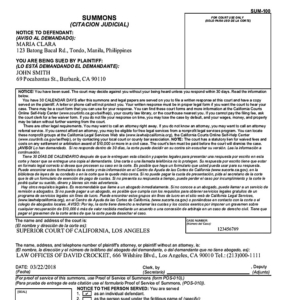
SERVING SUMMONS OUTSIDE THE US: PHILIPPINES
In today’s interconnected and diverse world, interaction among countries is unavoidable. One such cross-border interaction is getting jurisdiction in a legal action pending in one country over a person living in another country. When a lawsuit is filed in court, the latter must acquire jurisdiction over the person of the defendant. Generally, a summons (court…
Read More
Adopting a Child from the Philippines Part 3: Domestic Adoption
In the previous two articles of this series on adopting a child from the Philippines, we have discussed the process of Intercountry or Hague Convention Adoption. This part will tackle the Philippine rules and procedures on Domestic Adoption in relation to U.S. immigration requirements. As distinguished from Intercountry Adoption, in Domestic Adoption the petition for…
Read More
Adopting a Child from the Philippines Part 2: Intercountry Adoption
Adopting a Child from the Philippines Part 2: Intercountry Adoption – Who Can Adopt & Who May be Adopted The Philippine Inter-Country Adoption Act of 1995 (Republic Act No. 8042) and its Implementing Rules and Regulations (IRR) lay down the qualifications of individuals who can adopt as well as the children who can be adopted.…
Read More
Adopting a Child from the Philippines
Part 1: Intercountry Adoption Adoption is a lengthy and complicated legal process, especially if the child to be adopted will come from a country different from that of the adopters or what is known as intercountry adoption. Done improperly, it will result in loss of time and money; at worst, it will make the adopted…
Read More
Doing Business in the Philippines
If you are a non-Filipino citizen intending to invest and set up a business in the Philippines, there are different ways to do it and certain restrictions to observe. The primary law governing foreign investments in the Philippines is the Foreign Investments Act of 1991 or Republic Act No. 7042 (RA 7042), as amended by…
Read More
Dual Citizenship In The Philippines
YOU COULD BE A DUAL CITIZEN BY BIRTH A lot of children of Filipino ancestry who are born in the U.S. are not aware that they are citizens of both the U.S. and Philippines or are dual citizens by birth. A dual citizen by birth is different from a dual citizen by election; the former…
Read More
RECOGNITION OF FOREIGN DIVORCE DECREE IN THE PHILIPPINES
Philippine laws relating to marital status follow Filipinos wherever they may go. Thus, as a rule, a married Filipino remains married even if a divorce is obtained abroad because divorce is generally not recognized in the Philippines. Luckily there is a limited exception for recognition of a foreign divorce decree which would allow a divorced…
Read More
MISSED PAYMENTS ON REAL ESTATE FINANCING
YOUR RIGHT IF YOU MISS PAYMENTS ON YOUR REAL ESTATE FINANCING A lot of Filipino-Americans in the U.S. are buying real estate properties in the Philippines, like condos, townhouses or residential homes, as vacation houses or for investment purposes. Most of these purchases are financed either by a bank or the seller, and the buyer…
Read More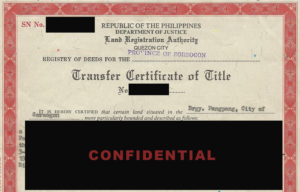
Land Title Issues In The Philippines
Do You Have a Clean Land Title? With the proliferation of fake land titles and fraudulent sales of lands in the Philippines, nothing is more important in buying real estate properties there than verifying the authenticity of the title or making sure there are no limitations or legal claims on the land. In short, you…
Read More
BECOME A GREEN CARD HOLDER UNDER THE EB-5 INVESTOR VISA
Investing in the U.S. is one of the fastest ways to get a Green Card or Legal Permanent Status in the U.S. Undoubtedly, the U.S. is still the world’s top investment destination. For several years through 2014, the cumulative foreign direct investments in the U.S. neared 3 trillion dollars, eclipsing other economic giants such as…
Read More
Selling Inherited Real Estate Property
For those living here in the U.S., most would rather sell the real estate properties they inherited in the Philippines than deal with the hassle of maintaining properties thousands of miles away, not to mention the costs. There are, however, important things one must know to ensure that the sale goes smoothly and legally. First,…
Read More- « Previous
- 1
- 2
- 3
- Next »